上高地を世界に称賛した登山の先蹤者たち。
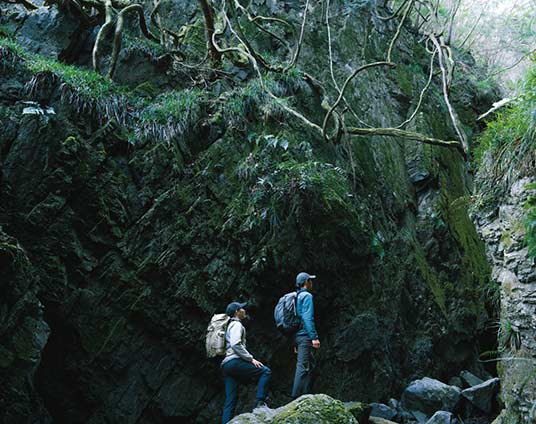
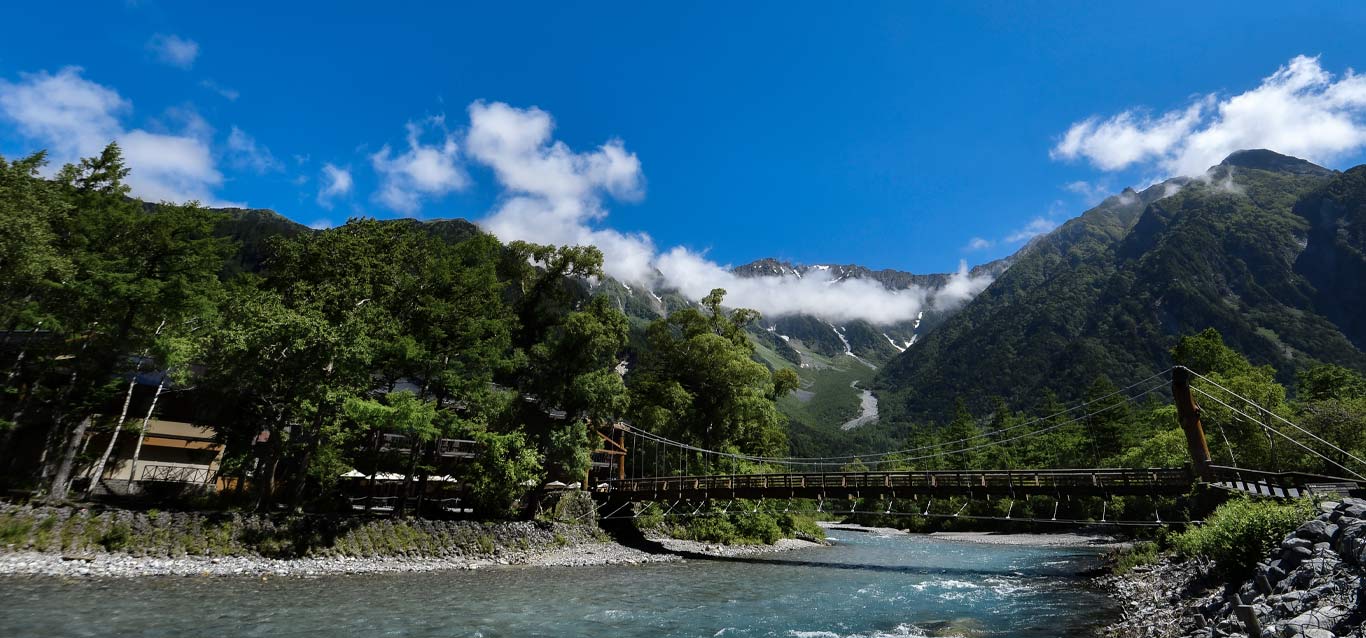
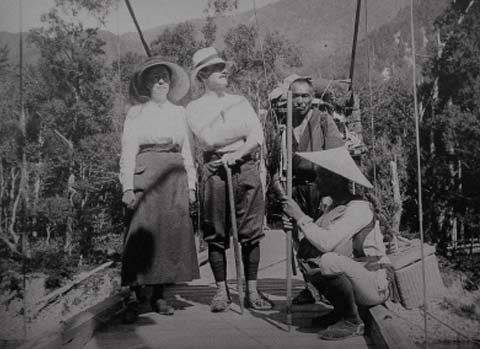
上高地の歴史を振り返ると、ウォルター・ウェストンと上條嘉門次の2人の名前がよく出てきます。英国人宣教師であるウェストンは、1896年(明治29)に著書『日本アルプス登山と探検』を出版し、自らが登った上高地や穂高連峰、槍ヶ岳を世界に紹介し絶賛しました。これによって、それまで信仰や修行、または生活のための山行きであった日本の登山が、広くレジャーとして知られるようになり、上高地も有名になりました。この功績から、ウェストンは今日でも「日本近代登山の父」として讃えられています。ウェストンの山行きを案内したのは、地元安曇村出身の猟師、上條嘉門次であり、彼の名前はウェストンの著書でも「ミスター・カモンジ」として記されています。

2人の歴史からさかのぼること60余年前、上高地周辺の山に初めて登ったのは、槍ヶ岳に登った富山の僧侶・播隆上人でした。当時は山岳信仰の登山であり、近代登山とは性格が異なりました。播隆は信者を連れて何度も槍ヶ岳に登りました。明治政府が近代化を進めるために外国人技師を多数雇ったとき、英国の冶金技師ウィリアム・ガウランドが1877年(明治10)7月に槍ヶ岳に登り、その記録を雑誌で紹介し、「Japan alps」という表現を使ったことが、今日の「日本アルプス」の語源になりました。日本人登山家の鵜殿正雄が嘉門次と一緒に初めて前穂高岳に登ったのが始まりでした。1916年(大正5)、後の首相である東久邇宮殿下が槍ヶ岳に登るために、島々から徳本峠、明神までの登山道が整備されました。このころから徐々に、大衆登山へと山は開かれ、上高地は観光地として知られるようになりました。
山岳リゾートとしての上高地発展の軌跡
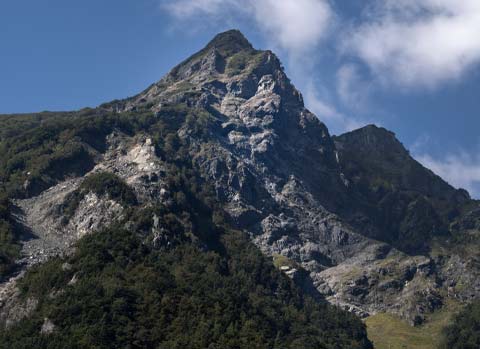
上高地は現在、年間120万人もの観光客が訪れる山岳景勝地です。
その由縁は、手つかずの自然が多く残り、大自然の宝庫と呼ばれることにあります。しかしながら、リゾート観光地としての歴史が浅く、一般的な観光客が多く訪れるようになったのは昭和年代に入ってからです。
明治以前、上高地には主に木こりが出入りしており、樹木を伐採していた。明治に入り、地元の島々の上條百次良は許可を得て、夏の間だけ松本周辺で集めた牛や馬を徳本峠を超えて上高地で放牧を始めました。これが上高地牧場の始まりです。牧場は小梨平、明神、徳沢の3箇所に位置しており、特に徳沢は徳沢牧場としても知られています。山々の残雪を背景に、牛や馬が放牧される光景は、古きよき時代の牧歌的な景色として、訪れる登山者に愛されました。
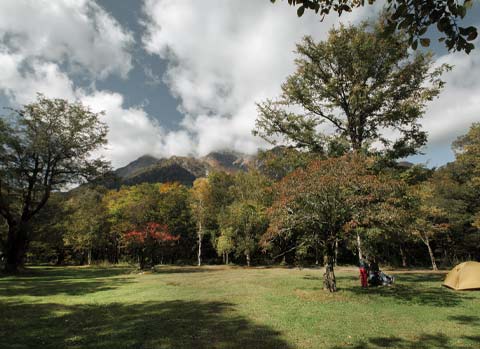
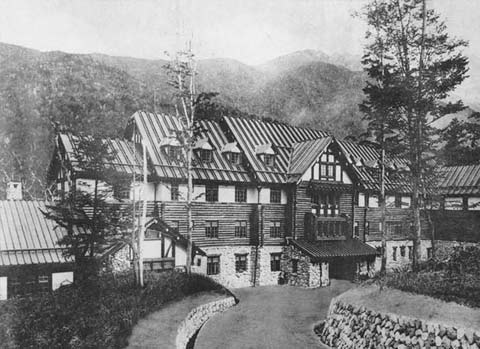
大正4年6月には焼岳が大爆発を起こし、流れ出た土石流が梓川をせき止め、そこにできた池は大正池と命名されました。その後、1927年には上高地が文豪芥川龍之介の小説『河童』の舞台となり、東京と大阪の新聞社が主催した「日本八景」の渓谷の部において、上高地が第一に推されました。また、同年には昭和天皇の実弟秩父宮殿下が上高地から奥穂高岳に登ったことや、国立公園選定の準備調査の中で、上高地の河原で日本で初めてケショウヤナギを発見したことが話題となりました。
その後、国の名勝および天然記念物に指定され、初の山岳リゾートホテルである上高地帝国ホテルが開業しました。建設にあたっては、釜トンネルを通り大正池まで資材を運び、そこから小船で大正池を運んでホテルを建設したとされています。これらの出来事により、上高地は山岳リゾート地として発展していきました。
上高地の歴史は、自然と人間の共存・調和を求めてきた歴史でもあります。観光ブームが訪れた時期には、その影響によって自然環境が損なわれることが懸念され、それに対する取り組みが行われました。
県道上高地公園線のマイカー規制は、その代表的な取り組みの一つです。自動車による排気ガスの影響を最小限にとどめることで、自然環境を保全し、今後も多くの人々に愛される場所として残すことができました。
また、上高地を管理する国立公園は、自然保護や地域振興を目的に設置されたものであり、その取り組みが継続されています。例えば、登山ルートの整備や山小屋の運営、トイレの整備などが行われ、上高地を訪れる人々が快適に過ごせる環境が整備されています。
上高地は、自然と人間の共存・調和を実現するための様々な取り組みが行われ、今日も多くの人々に愛される場所として存在しています。
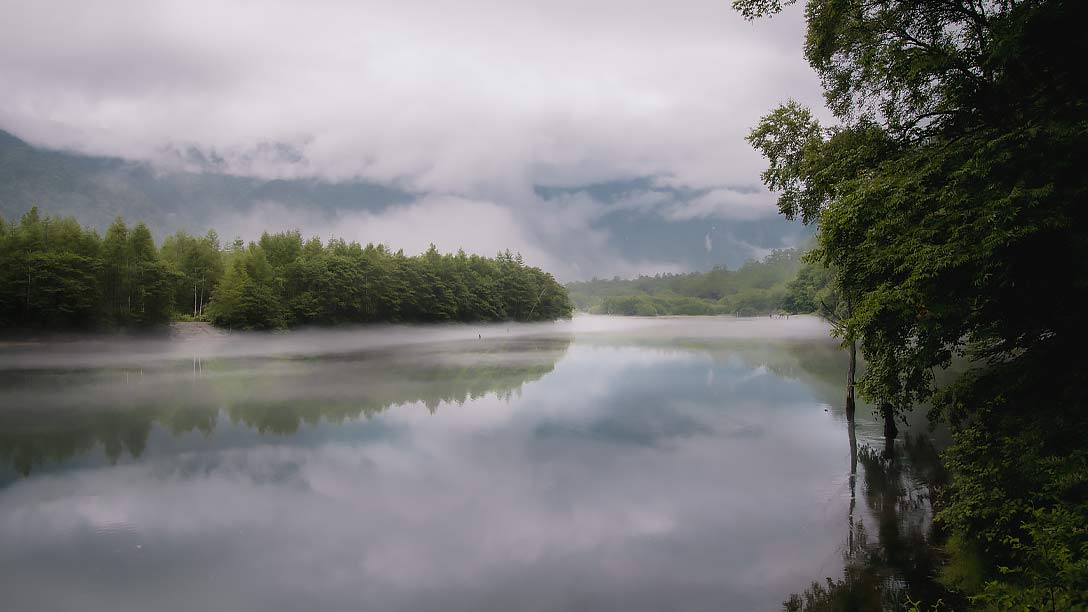
次代へ、子供たちへ残したい風景・上高地。
上高地ならではの、上高地でしか見ることのできない風景━。上高地の自然保護意識は、すでに100余年前に根付いていたものでした。
上 高地で最初に自然保護の動きがあったのは、1909(明治42)年のことです。すでに高山植物の採取を禁止・保護するようになり、また保護の一方で上高地バスターミナルと小梨平周辺では、1915(大正4)年から約10年かけてカラマツの植栽をしています。
雷鳥、カモシカ、イワナは次々に捕獲が禁止され天然記念物に指定。上高地一帯も天然記念物や国立公園に指定されました。上高地の地元住民の多くが、1963(昭和38)年から「上高地を美しくする会」を発足させ、ゴミのない美しい上高地を目指して、日々道路周辺のゴミ拾い活動を行います。
上高地の自然を次代へ。大自然というかけがえのない、代替のないものを子どもたちへ継承していくこと。それは私たち一人ひとりの使命です。訪れる方一人ひとりの愛情で、上高地を守っていきましょう。

日本でも希有、ふたつの称号をもつ上高地。
黒部峡谷と上高地は、日本の自然景観の中でも特に美しく、その自然環境や文化的価値を守るために、「特別名勝」および「特別天然記念物」として指定されています。この指定は、その地域の自然や文化を保護するために国が行う制度で、国の文化財保護法に基づいて行われます。指定を受ける地域は、一般の観光客が自由に入ることができますが、その保護のために立入り制限や規制があることもあります。
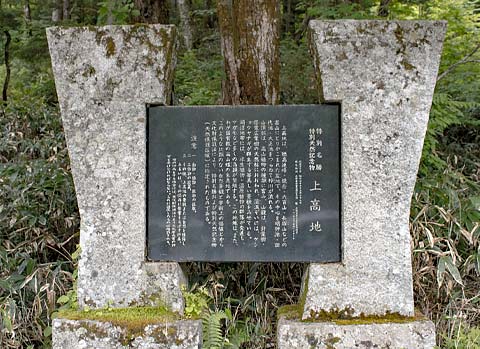
[特別名勝]
特別名勝とは、日本国が文化財保護法で指定した名勝(景色の良い地)のうち、特に価値の高いものとして認められたものであり、国宝と同格として承認された地です。名勝地、景勝地とも呼ばれ、国内には宮城の松島、金沢兼六園、京都の天橋立など、全35件が指定されています。
[特別天然記念物]
特別天然記念物とは、天然記念物(日本にとって価値の高い自然物)のなかでも世界的、国家的に貴重なものとして指定されたものです。上高地は「天然保護区域」とも呼ばれ、北海道の大雪山などと並び大切に守り続けねばならない4地のひとつでもあります。 その他、特別天然記念物には、
【動物】トキやコウノトリなど21件
【植物】屋久島スギ原生林など30件
【地質・鉱物】松本市・白骨温泉の墳湯丘など
20件が指定され、保護には国を挙げての徹底が図られています。
上高地略年表
- 文政11年(1828年) 7月20日
- 播隆槍ヶ岳に登る 仏像を安置する
- 明治10年(1877年) 7月28日
- ウィリアム・ガウランド槍ヶ岳に登る
- 明治18年(1885年) 5月
- 上高地牧場放牧始まる
- 明治25年(1892年) 8月12日
- ウォルター・ウェストン槍ヶ岳に登る
- 明治26年(1893年) 8月25日
- ウェストン 嘉門次を案内に前穂高岳に登る
- 明治38年(1893年) 9月12日
- 鵜殿正雄日本人登山家として前穂高岳に初めて登る
- 明治40年(1907年)12月 8日
- 焼岳大爆発
- 明治42年(1909年) 8月16日
- 高山植物の採取禁止となる
- 明治43年(1910年)
- 河童橋初代つり橋架設される
- 大正 3年(1914年) 春
- 現在のバスターミナル周辺にカラマツ植栽を始める
- 大正 4年(1915年) 6月 6日
- 焼岳大噴火により大正池出現
- 大正 5年(1926年) 2月
- 山林局上高地一帯を保護林に指定 以後伐採禁止される
- 大正 5年(1916年) 8月12日
- 東久邇宮稔彦殿下槍ヶ岳に登る
- 大正 9年(1920年) 秋
- 小林喜作 喜作新道を開通させる
- 大正12年(1923年) 3月 7日
- 雷鳥が国の天然記念物に指定される
- 昭和 2年(1927年) 3月 1日
- 芥川龍之介小説『河童』を発表する
- 昭和 2年(1927年) 7月 6日
- 「日本新八景」に上高地が『渓谷の部』で選ばれる
- 昭和 2年(1927年) 7月24日
- 芥川龍之介自殺する
- 昭和 2年(1927年) 8月
- 秩父宮殿下奥穂高岳槍ヶ岳縦走登山する
- 昭和 2年(1927年)
- 理学博士中井猛之進 上高地でケショウヤナギ発見する
- 昭和 3年(1928年) 3月24日
- 上高地が国の名勝および天然記念物に指定される
- 昭和 5年(1930年)
- 河童橋架け替え(つり橋2代目)
- 昭和 6年(1931年) 4月 1日
- 国立公園法が公布される
- 昭和 8年(1933年)10月 6日
- 上高地ホテル(現在の上高地帝国ホテル)が開業する
- 昭和 9年(1934年) 5月 1日
- カモシカが天然記念物に指定される以後狩猟禁止となる
- 昭和 9年(1934年)12月 4日
- 上高地一帯が中部山岳国立公園に指定される
- 昭和 9年(1934年)
- 上高地牧場終わる
- 昭和10年(1935年) 7月
- 河童橋までバス乗り入れる
- 昭和22年(1947年) 6月14日
- 第1回ウェストン祭行われる
- 昭和27年(1952年) 3月29日
- 上高地が国の特別名勝特別天然記念物に指定される
- 昭和30年(1955年) 2月15日
- カモシカと雷鳥が国の特別天然記念物に指定される
- 昭和32年(1957年)
- 河童橋架け替え(つり橋3代目)
- 昭和40年(1965年)
- 上高地バスターミナル竣工
- 昭和42年(1967年) 4月27日
- 第1回上高地開山祭が開催される
- 昭和50年(1975年) 1月 1日
- 上高地の梓川での釣りが禁止となる
- 昭和50年(1975年)
- 河童橋架け替え(つり橋4代目)
- 昭和50年(1975年) 4月
- 県道上高地公園線のマイカー規制始まる
- 平成 9年(1997年) 6月 5日
- 河童橋架け替え(つり橋5代目)
- 平成 9年(1997年)12月 6日
- 安房トンネル開通する
- 平成15年(2003年)
- 上高地インフォメーションセンターが開所
- 平成16年(2004年) 7月24日
- 観光バス規制始まる
- 平成17年(2005年) 4月 1日
- 安曇村と松本市が合併、松本市上高地となる
- 平成17年(2005年) 7月 2日
- 新釜トンネル開通する
- 平成22年(2010年)
- 河童橋が「つり橋」となって100年を迎える
- 平成28年(2016年) 7月19日
- 上高地トンネル開通する
- 平成28年(2016年) 8月11日
- 第1回「山の日」記念全国大会が上高地で開催される
- 平成29年(2017年) 7月30日
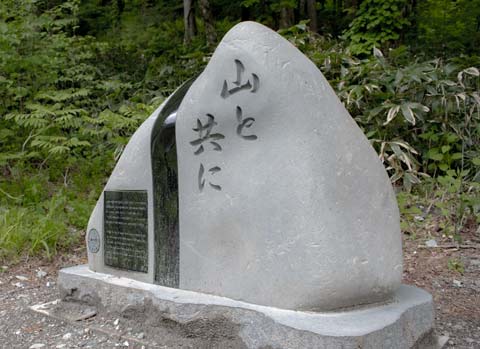
- 第1回「山の日」記念全国大会の記念碑建立・除幕式が行われる
- 平成30年(2018年) 4月27日
- 第50回上高地開山祭が開催される